
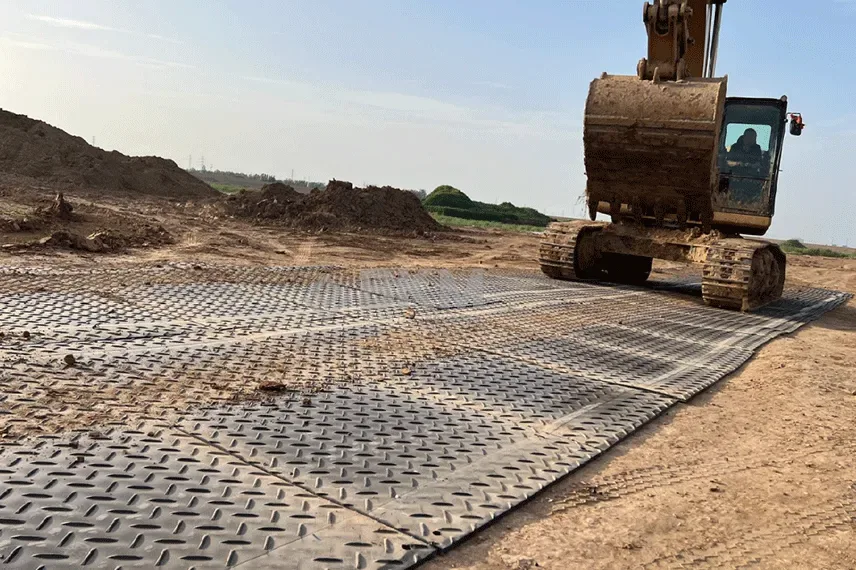
Short answer: for most temporary access work — construction, utilities, renewables, events and remote sites — HDPE ground protection mats win on deployment speed, transport efficiency, traction, corrosion resistance, electrical safety and cost per use. Steel remains the correct choice where a surface must span an open trench or carry an extreme concentrated point load on a hard, fully supported base.
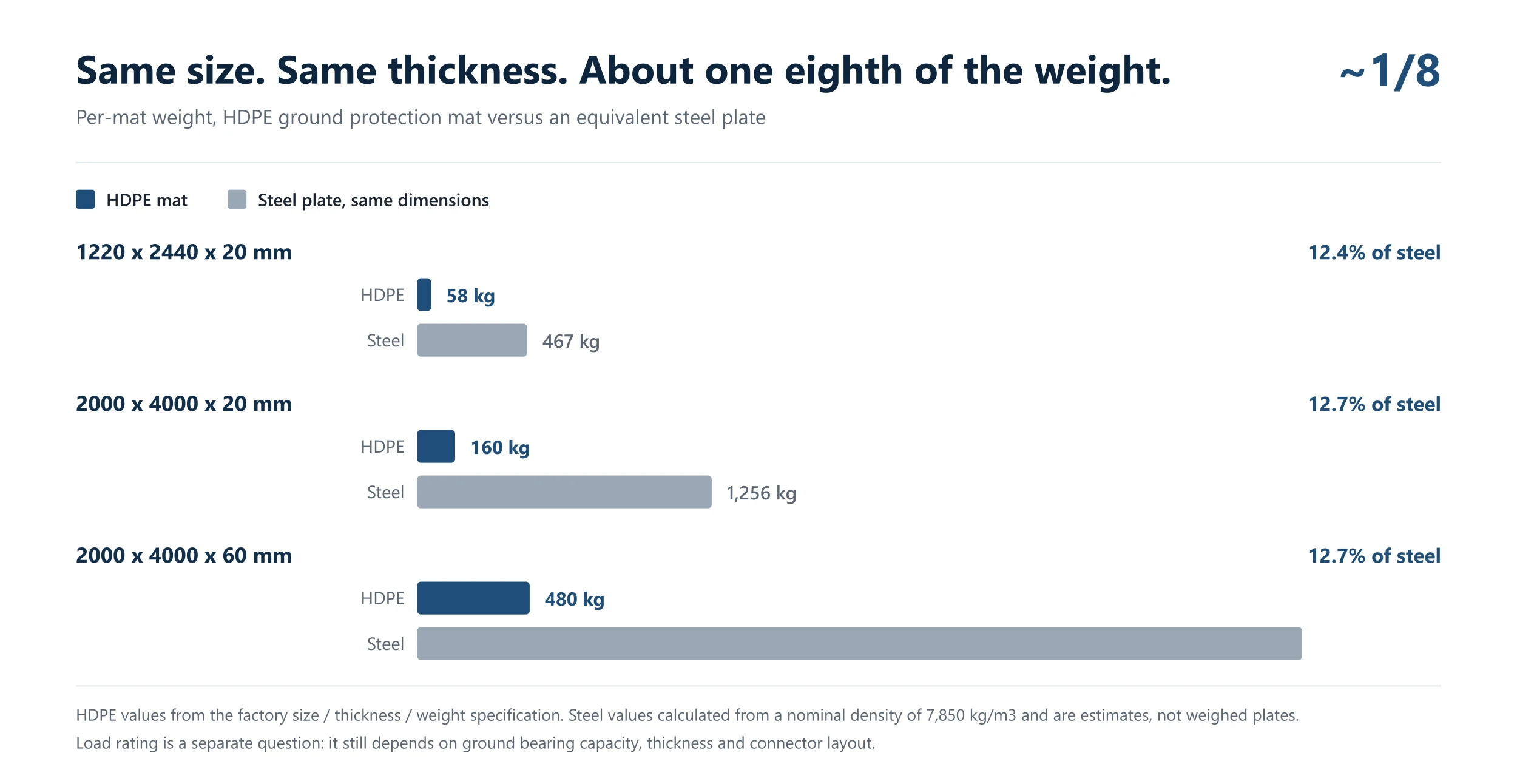
Choosing between HDPE ground protection mats and steel road plates therefore comes down to the constraints your project actually has: how soft the ground is, how often the surface will be moved, whether a crane can reach the site, what the surface underneath is worth, and what a delay costs. At identical dimensions and thickness, an HDPE mat weighs about one eighth as much as a steel plate — a difference that reaches into almost every line of a temporary-works budget.
Below is a short verdict for each application, with links to the detailed guides, plus the factory size and weight data behind the comparison and a six-point specification checklist. It is written for contractors, equipment managers and procurement teams specifying temporary access.
Quick comparison: HDPE mats vs steel plates
| Decision factor | HDPE ground protection mats | Steel road plates |
|---|---|---|
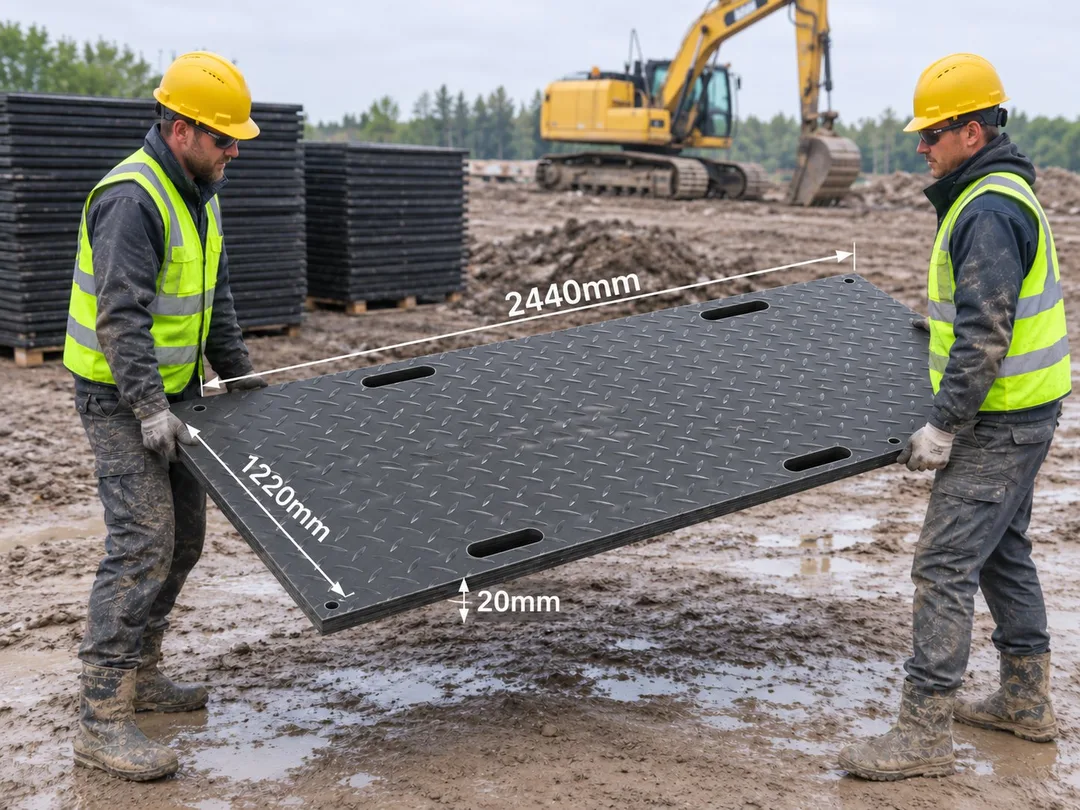
| Weight & handling | About 1/8 the weight of a steel plate of the same size and thickness. A 1220 × 2440 × 20 mm mat weighs 58 kg — a genuine two-person lift. Large formats need a small forklift, never a crane. | Very heavy. A 2000 × 4000 × 20 mm steel plate weighs roughly 1,256 kg; positioning requires a crane, HIAB or large forklift. |
| Installation speed | Interlocking systems laid by hand on the lighter formats; no lifting plant, crane permit or lift plan. | Every plate is a machine lift. Progress is tied to equipment availability. |
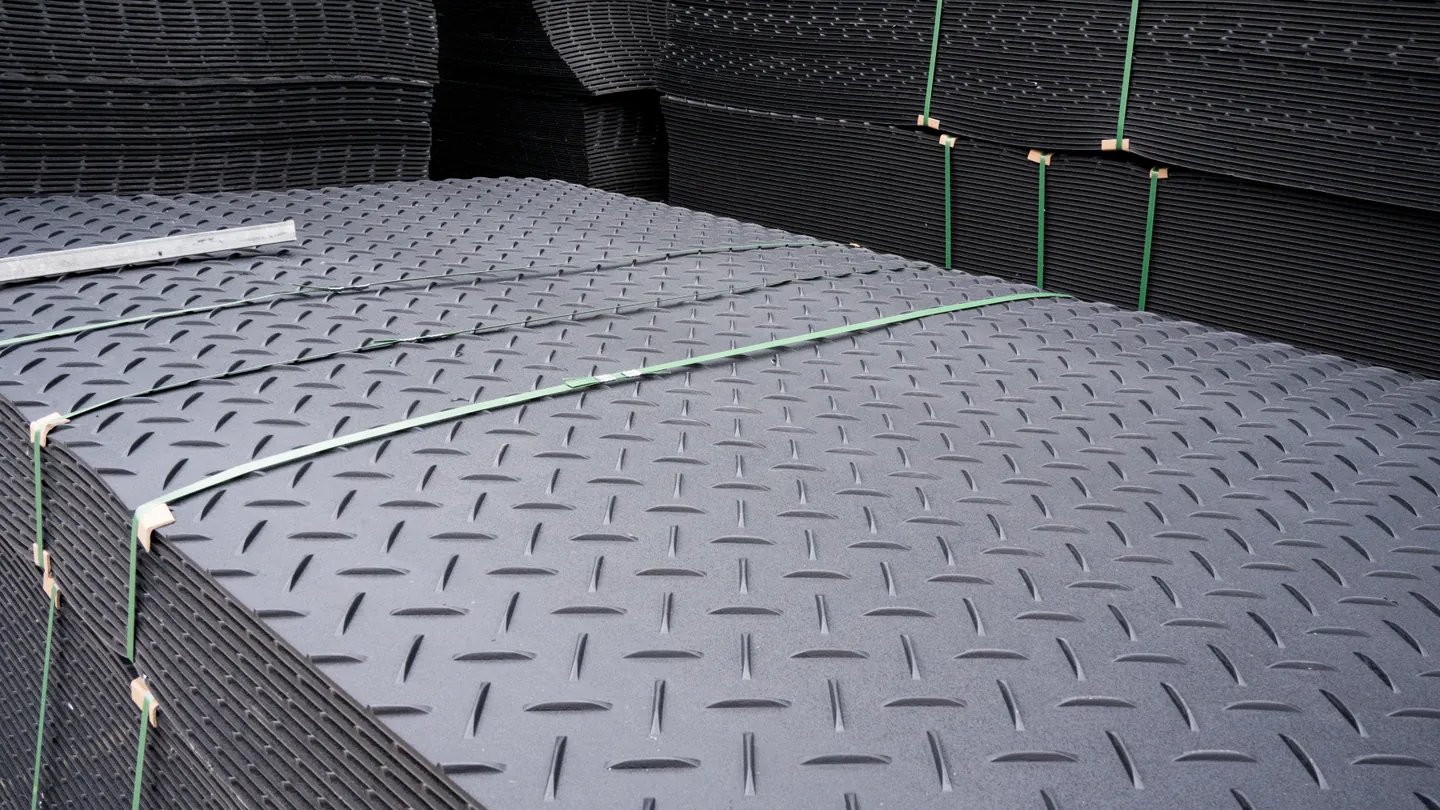
| Transport efficiency | More square metres per truckload; volume is the binding constraint rather than payload. Lower freight cost and transport emissions per m². | Payload limits the number of plates per load long before volume does. |
| Load behaviour | Flexes to follow the ground profile, spreading pressure, then recovers flat. | Very high rigidity, but can permanently bend or warp under overload or rough handling. |
| Extreme point loads | Good to very good; heavy-duty specifications are rated up to 120 tonnes, subject to ground conditions and specification. | Excellent on a hard, well-supported base — the reference option for maximum rigidity. |
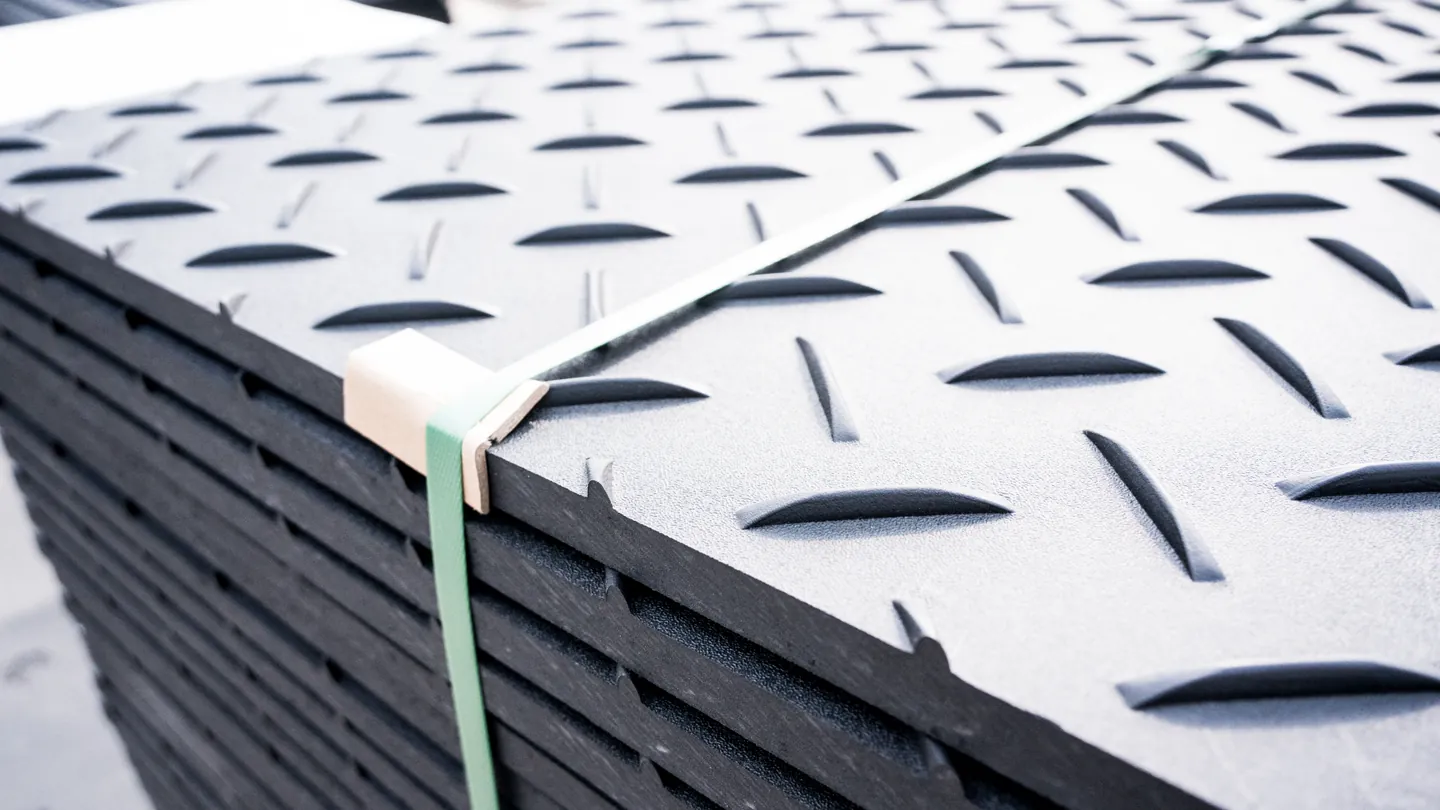
| Wet-weather traction | Moulded anti-slip texture on both faces; a pedestrian-grade pattern can be specified on the reverse. | Smooth or lightly patterned; notably slippery when wet, muddy or oily. |
| Corrosion & chemicals | Does not rust, rot or absorb water; chemically inert against fuels, salts, most acids and alkalis. | Rusts without ongoing coating and maintenance; vulnerable in coastal and saline conditions. |
| Electrical safety | Non-conductive — a meaningful safety margin near buried cables and substations, subject to site electrical rules. | Conductive. Requires additional isolation measures. |
| Noise | Low impact noise under traffic. | Loud metallic impact, especially at joints — a real constraint for night work and residential areas. |
| Damage to the surface below | Conforms to the ground and spreads pressure; smooth-back options protect turf, asphalt and finished paving. | Hard edges and high dead load can crush turf, mark paving and stress buried services. |
| Reuse & end of life | Reusable across many projects, easy to wash down between sites, fully recyclable. | Reusable, but corrosion and deformation accumulate; recycling is energy-intensive. |
| Best fit | Temporary access, repeated deployment, soft or sensitive ground, tight access, remote sites. | Permanent or semi-permanent high point loads on hardstanding; spanning open trenches. |
Figures are indicative. Always confirm against the manufacturer’s published specification and a site-specific ground assessment.
Standard sizes, thicknesses and mat weights
Weight is the number that decides almost everything else — whether a crew can lay the mats by hand, what the freight looks like, and whether a crane appears on the budget at all. These are our standard formats:
| Thickness (mm) | 1220 × 2440 mm | 2000 × 4000 mm |
|---|---|---|
| 12.7 | 36.83 kg | 101.6 kg |
| 20 | 58 kg | 160 kg |
| 30 | 87 kg | 240 kg |
| 40 | 116 kg | 320 kg |
| 50 | 145 kg | 400 kg |
| 60 | 174 kg | 480 kg |
Custom dimensions and thicknesses can be produced for a specific load case or site layout. Our ground mat specifications page and buying guide explain how to select thickness against ground bearing capacity.
What this means on site
Mats up to about 60 kg — the 12.7 mm and 20 mm formats in 1220 × 2440 mm — are a genuine two-person hand lift. Formats in the 100–240 kg range are normally handled by a four-person crew or a small forklift. The 320–480 kg heavy formats need a forklift or telehandler, but still ordinary site plant rather than a crane with a lift plan.
The steel equivalent
At identical dimensions and thickness, a steel plate is roughly eight times heavier: a 2000 × 4000 × 20 mm steel plate weighs approximately 1,256 kg, against 160 kg for the HDPE mat. That one ratio explains the crane requirement, the payload-limited trucking, the installation programme and most of the freight gap in the table above. Steel figures are calculated from a nominal density of 7,850 kg/m³; actual plate weights vary by grade and profile. Load rating is a separate question and still depends on ground conditions, thickness and connector layout.
Verify all weights against the specification sheet for your order; thickness tolerance and traction texture can shift the figure slightly.
Verdict by application
This page is the decision hub. Each application has its own detailed guide — open the one that matches your site for layout, thickness and connector recommendations. The application overview lists every case in one place.
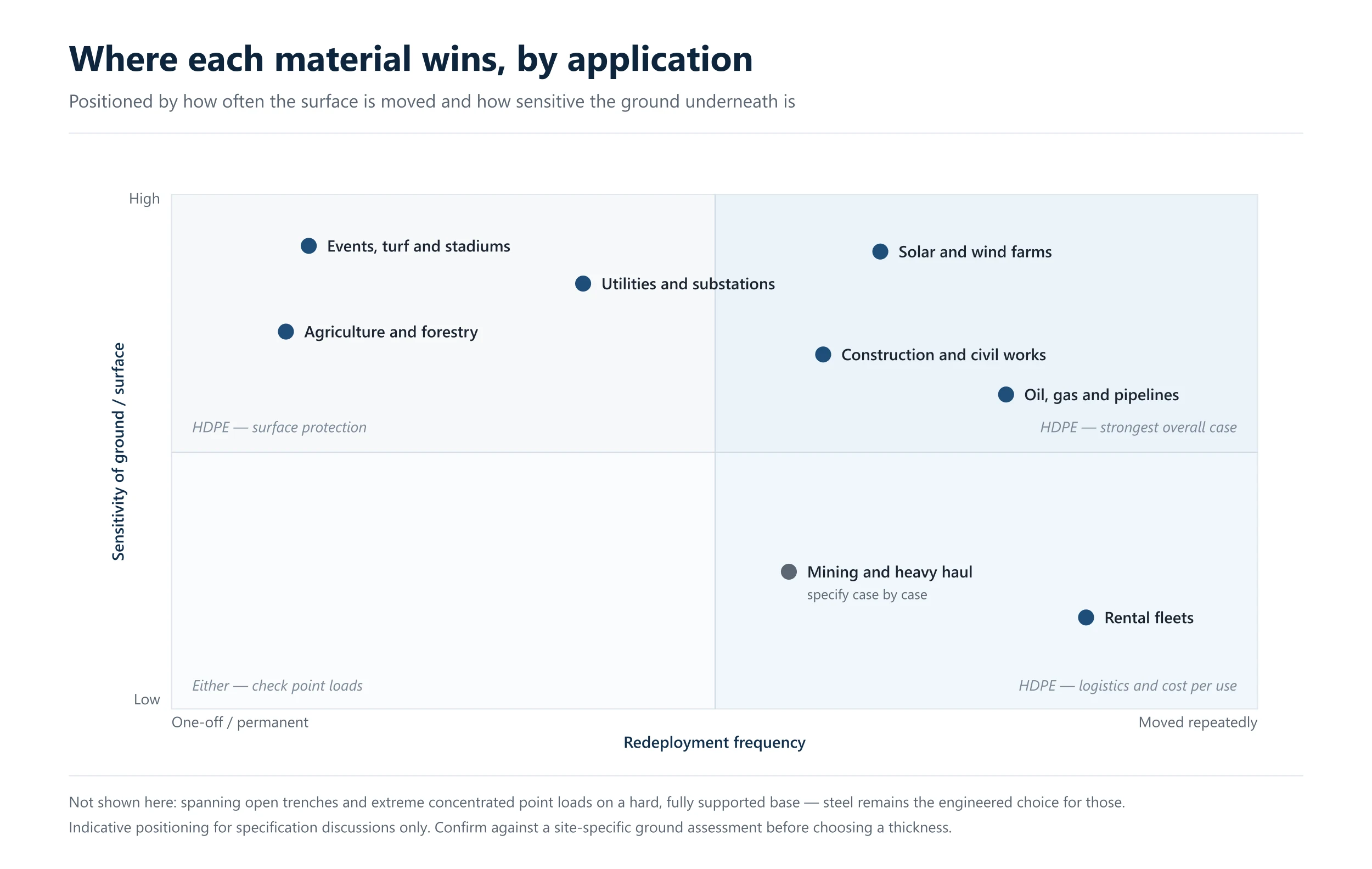
1. Construction sites and civil works
Verdict: HDPE. Temporary access roads are relaid as the work front moves, and steel’s crane requirement puts every reposition on the critical path. Lighter formats are a two-person lift, and the mats recover flat instead of holding a permanent warp under tracked plant.
2. Oil & gas, pipelines and remote energy sites
Verdict: HDPE. On a linear right-of-way, payload rather than deck space decides how many plates reach the site, so steel multiplies trips and crane mobilisation over hundreds of metres. HDPE is also chemically inert against fuels, brines and salt, with no corrosion obligation after demobilisation.
3. Utilities, power and substations
Verdict: HDPE, with one hard boundary. Non-conductivity adds a passive safety margin near buried cables and live apparatus, and the mats can be placed carefully by hand over marked routes. Non-conductive does not mean a polymer mat can span an open excavation — that remains steel’s job, and site earthing and isolation rules always govern.
4. Solar and wind farm construction
Verdict: HDPE. Dispersed work fronts make lifting plant expensive to move, and soft agricultural subgrade can be damaged by the dead load of steel before any vehicle crosses. Lower ground pressure, no rust staining at handover, and low-temperature impact resistance down to −40 °C make mats the practical choice for temporary tracks.
5. Events, festivals, stadiums and turf protection
Verdict: HDPE, effectively uncontested. A crane on a stadium pitch is a non-starter; hand-laid interlocking mats spread load instead of cutting into turf, stay quiet during overnight build and strike, and leave no rust marks before Monday morning.
6. Agriculture, forestry and environmentally sensitive ground
Verdict: HDPE. Non-porous mats pressure-wash in minutes and do not carry soil, weed seed or pathogens between sites, while rigid steel edges crush soil structure and shallow drainage. Biosecurity and reinstatement obligations are usually what settle this decision.
7. Mining, quarries and heavy haul routes
Verdict: specify case by case — the closest comparison. Correctly specified HDPE handles haul roads and laydown pads well, but extreme concentrated point loads or very soft subgrade may call for a heavier mat, ground improvement or a steel/hybrid system. Even here, repositioning without a dedicated crane and no permanent warping keep the logistics case alive.
8. Rental fleets and contractors running repeat projects
Verdict: HDPE on lifecycle cost. A reusable mat spreads its purchase cost across years of deployments, with no crane line item on each job, no anti-corrosion treatment and no deformation inspection after every hire. Model cost per deployment, not price per square metre.
Where steel plates still make sense
An honest comparison earns more trust than a one-sided one. Specify steel when:
- A surface must span an open trench or excavation and carry road traffic. This is a bending/spanning problem, and rigid steel plate is the engineered answer. Polymer mats are ground-support products, not structural bridges.
- An extreme concentrated point load sits on a hard, fully supported base — for example a permanent crane outrigger position on reinforced concrete where maximum stiffness is required.
- The installation is permanent or semi-permanent, so the weight penalty is paid once and never amortised across redeployments.
- The working environment involves hot work, molten material or sustained high temperature where a polymer surface is unsuitable.
Everything else — temporary access, repeated deployment, soft or sensitive ground, restricted access and remote logistics — is where HDPE wins on total project cost, safety and programme certainty.
How to specify: a six-point checklist
Before requesting a quotation, write down:
- Ground condition — soil type, moisture content, CBR or equivalent bearing value, slope, and any buried services.
- Real load case — maximum axle load and maximum point load (outriggers, tracks), static versus dynamic, traffic frequency, plus an appropriate safety factor.
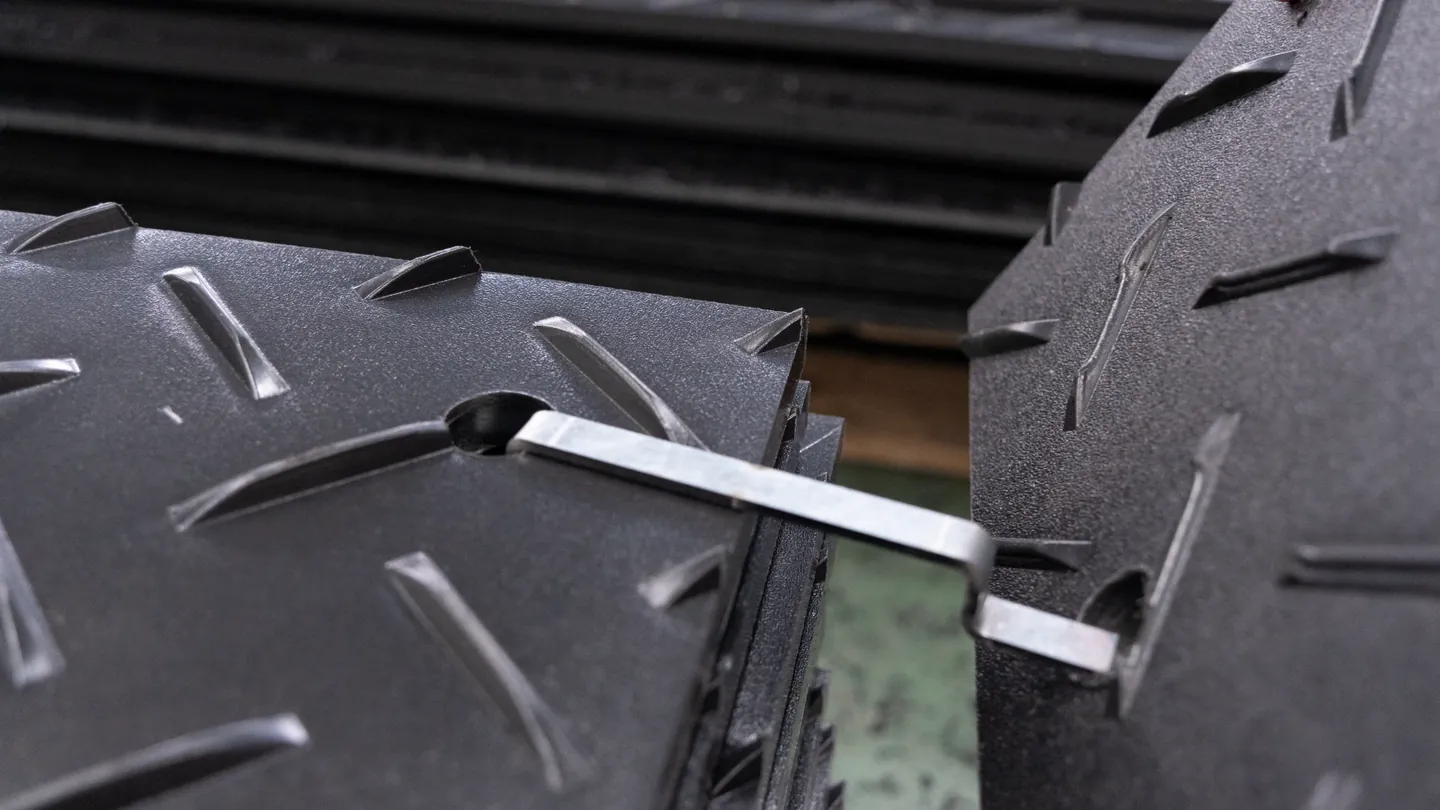
- Mat specification — dimensions, thickness, material grade, rated load for that thickness, resulting weight per mat, and the connector system (two-way for straight runs, four-way for pads and turning areas).
- Surface requirement — traction pattern on each face; smooth-back option for finished paving or turf; drainage and edge-ramp details.
- Environment — temperature range, UV exposure, fuel/chemical contact, coastal salinity, cleaning and biosecurity requirements.
- Evidence — a written rated load for the exact specification, material grade and traceability, UV-stabilisation statement, and warranty terms. A supplier that puts its rating in writing is a supplier that can stand behind a tonnage claim.
ANVIHUANYU manufactures and exports HDPE ground protection mats in custom sizes and thicknesses, with in-house production and thickness inspection on every batch. Request a specification and quotation with your load case and ground conditions, or read about our manufacturing capability.
Frequently asked questions
Are HDPE ground protection mats as strong as steel plates?
Not in terms of absolute stiffness — steel is more rigid. But ground protection is about distributing load over soft soil, and a properly specified heavy-duty HDPE mat is rated for loads that cover most construction and industrial equipment. Steel retains an advantage for extreme concentrated point loads on a hard base, and for spanning open trenches.
How much lighter are HDPE mats than steel plates?
At the same dimensions and thickness, roughly one eighth of the weight — about 87% lighter. A 2000 × 4000 × 20 mm HDPE mat is 160 kg; the equivalent steel plate is approximately 1,256 kg. In practice that is the difference between a small forklift and a scheduled crane lift for every plate.
What sizes and thicknesses are available?
Standard formats are 1220 × 2440 mm and 2000 × 4000 mm, in six thicknesses from 12.7 mm to 60 mm. Custom dimensions and thicknesses are available for specific load cases or site layouts.
How much does one HDPE ground protection mat weigh?
From 36.83 kg (1220 × 2440 × 12.7 mm) to 480 kg (2000 × 4000 × 60 mm). A commonly specified 1220 × 2440 × 20 mm mat is 58 kg — light enough for two people to position by hand. See the size and weight table for all standard formats.
Can HDPE mats be used under crane outriggers?
Yes, on suitable ground and with the correct mat thickness and outrigger pad arrangement — but confirm the point load and ground bearing capacity with an engineer, and check the rated load for that exact specification. Never extrapolate from a headline tonnage figure.
Do HDPE mats work in freezing temperatures?
UV-stabilised HDPE grades retain impact resistance at low temperature; our heavy-duty mats are rated for service down to −40 °C. Confirm the low-temperature impact data for the grade you are buying, since brittle failure is the limiting factor in cold climates.
Are HDPE mats safe to use near live cables?
HDPE is non-conductive, which provides a passive safety margin over steel near buried cables and substations. It does not replace site earthing, isolation procedures or electrical safety rules — those always govern.
Can they replace steel trench covers?
Generally no. Covering a trench that vehicles drive across is a structural spanning application; steel road plates remain the correct product. HDPE mats are designed to protect and stabilise the ground beneath a load.
How long do HDPE ground protection mats last?
Service life depends on load severity, handling and UV exposure. A well-maintained mat is reusable across many projects over multiple years and is fully recyclable at end of life. Ask for warranty terms rather than relying on a generic industry figure.
How should mats be cleaned between sites?
Pressure-wash, inspect for cracks, damaged edges and connector wear, and store flat. Because HDPE is non-porous and does not absorb water, it dries quickly and does not carry soil or seed between sites — a practical biosecurity advantage over timber and a maintenance advantage over steel.
The short version
Steel is a permanent-load material carrying permanent-weight logistics. For temporary access — which is most ground protection work — HDPE mats win on deployment speed, transport efficiency, traction, corrosion resistance, electrical safety, surface protection and cost per use. Steel still wins where a surface must span a void or carry an extreme point load on hardstanding.
The decision comes down to two questions: how many times will this surface be moved, and what is the ground beneath it worth? If the answer is “many” and “a lot”, HDPE is the engineering choice.
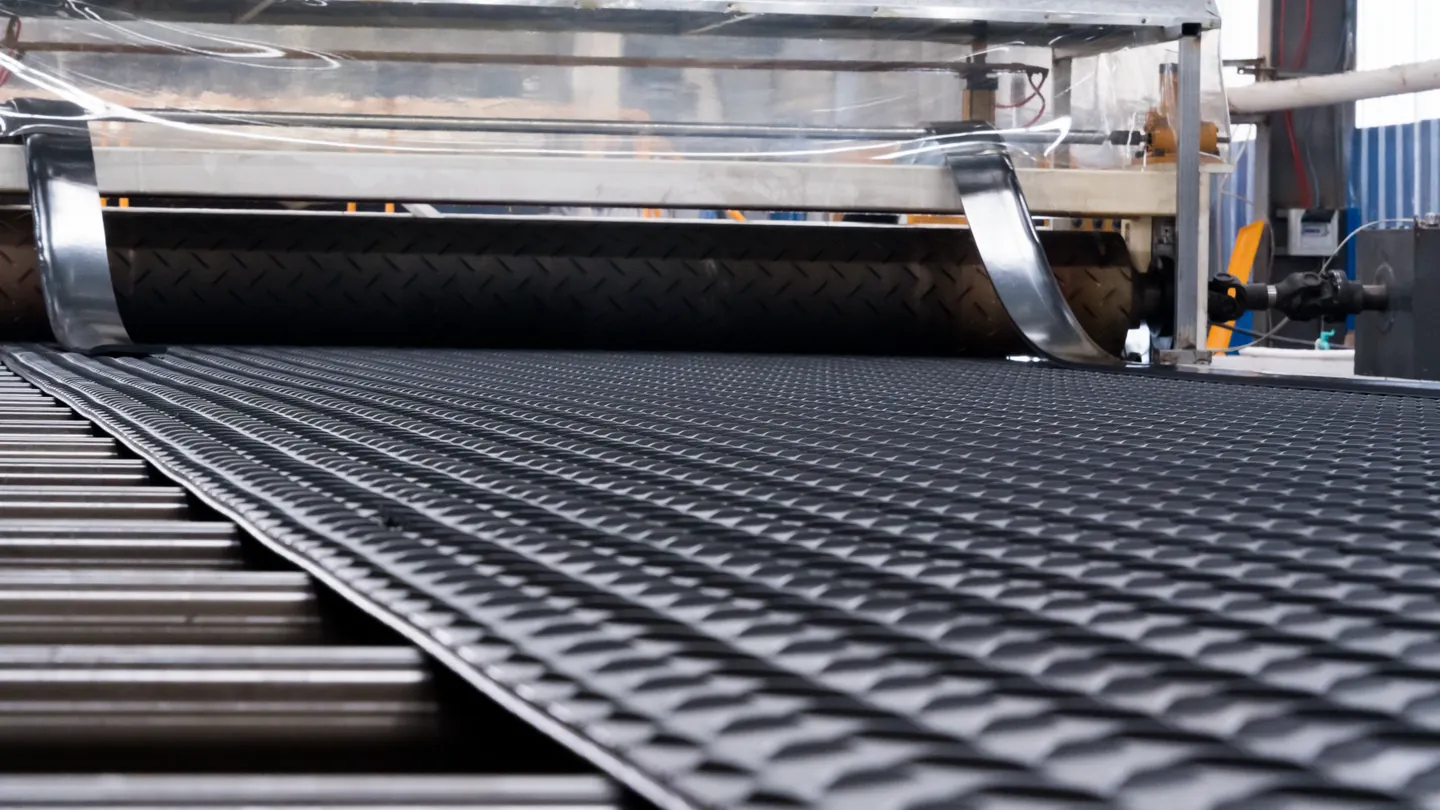
Go deeper: want to know why a molded HDPE mat outperforms steel on temporary access — and what happens inside the factory to make it that way? Read how HDPE ground protection mats are made, the eight-stage compression molding process from raw resin to finished panel.