
Container Loading & Logistics
See how we load HDPE ground protection mats at our own factory in Shijiazhuang. Real loading-bay photos, a real 40HQ container manifest, and the packing method we use to deliver mats intact to your port.
Inside our loading bay
These are our own loading photos — not stock images. They show the same mats, the same forklifts and the same containers we use for your order. Click any image to open the full-size version.
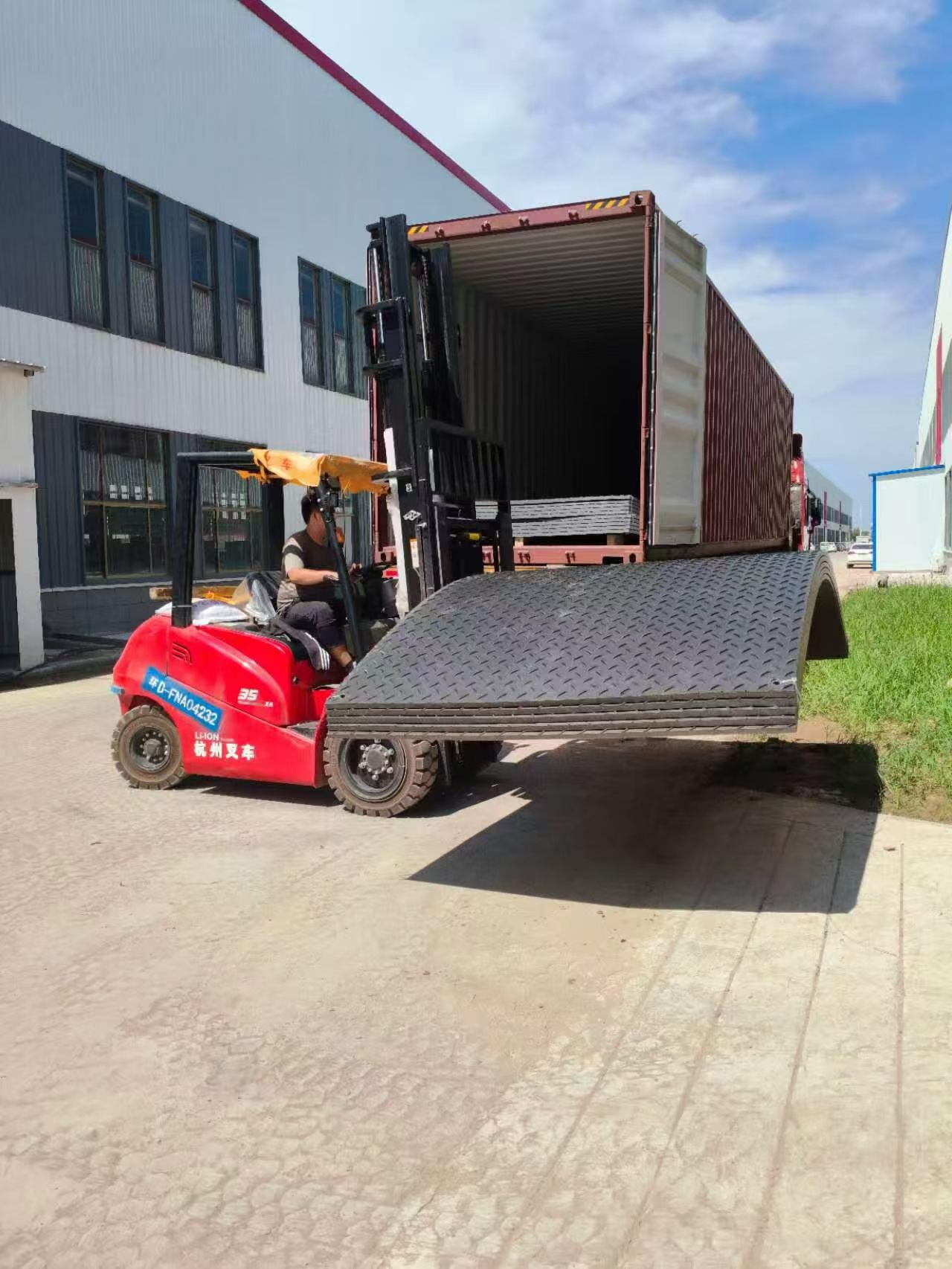
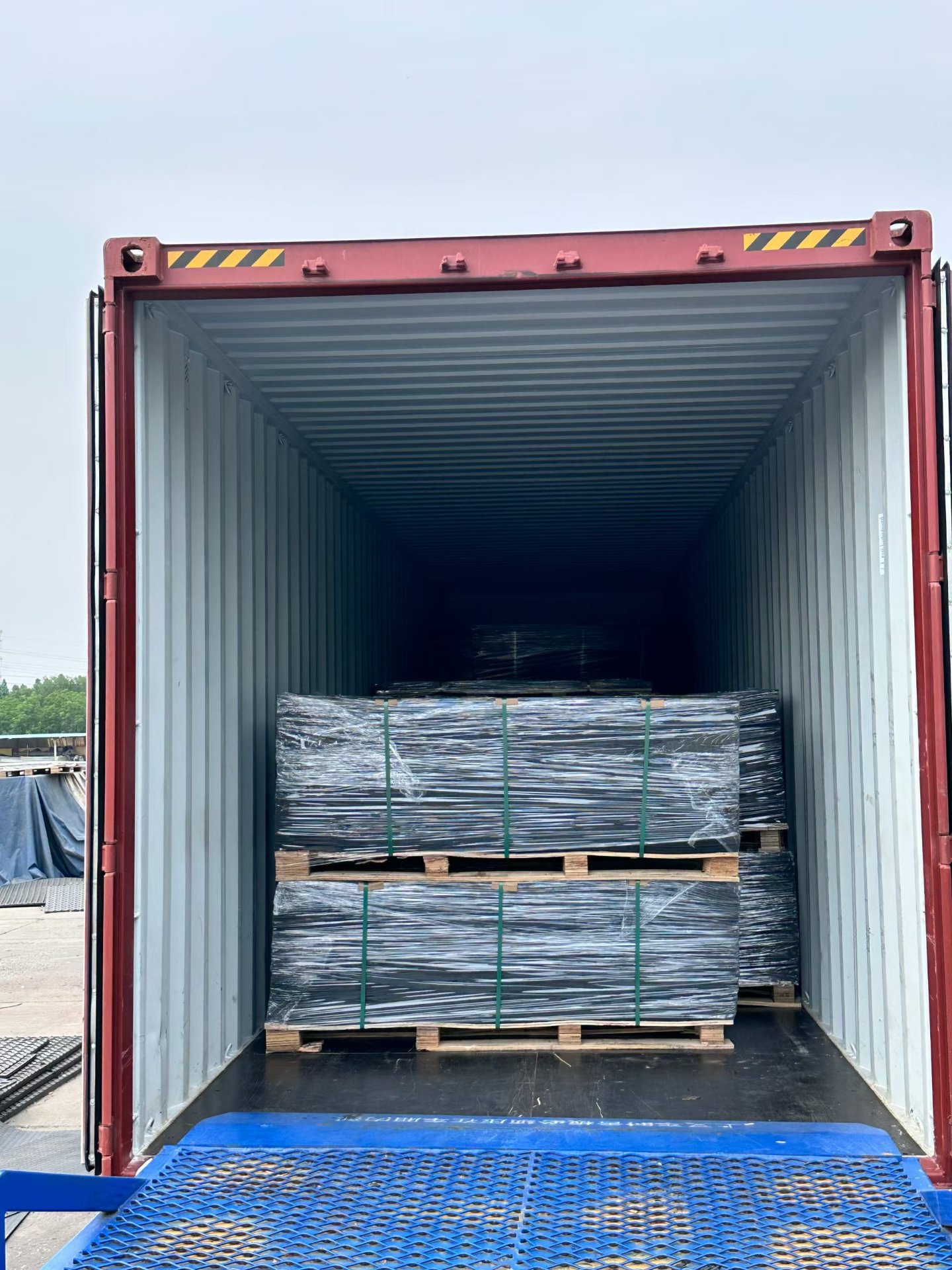
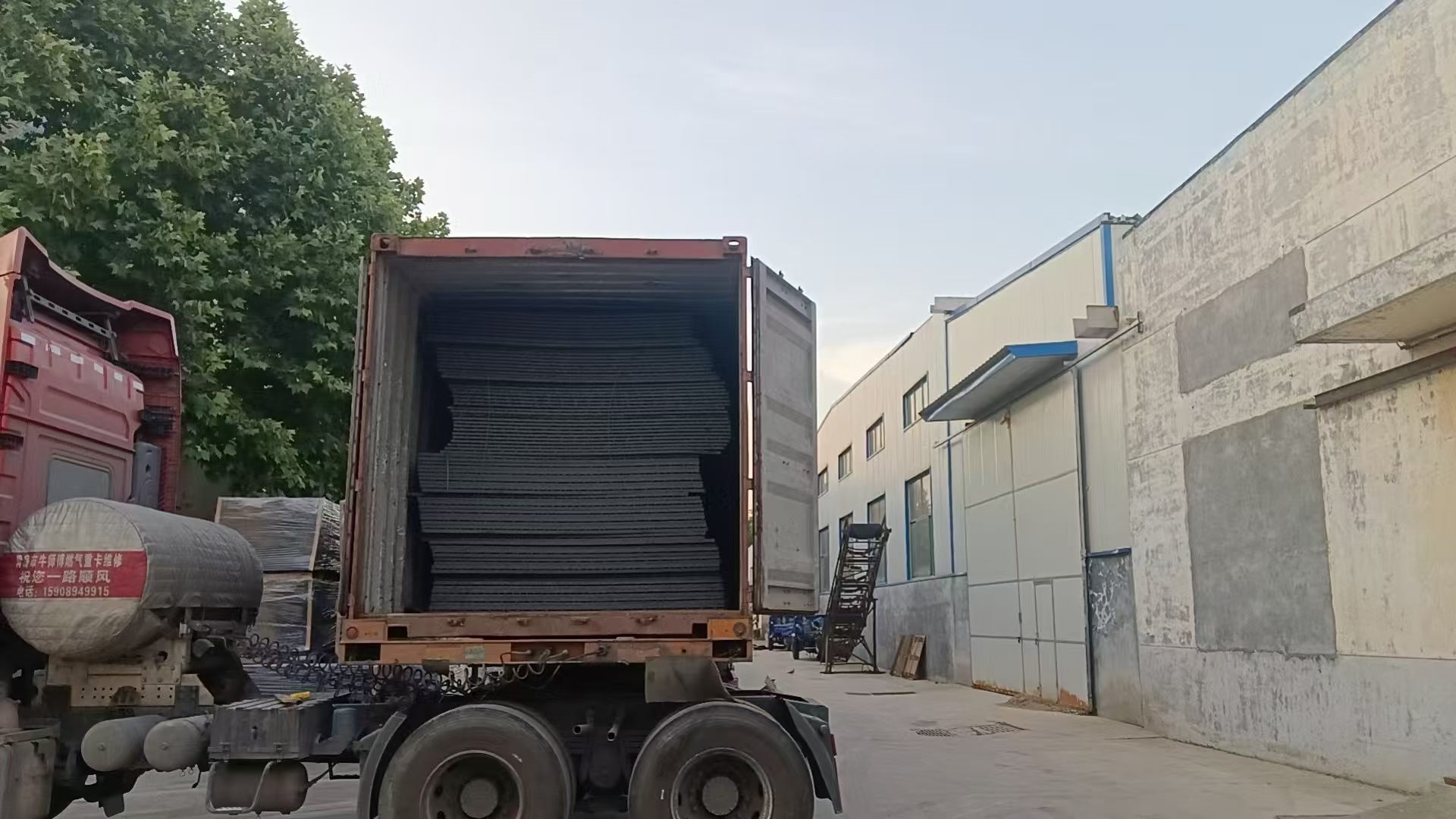
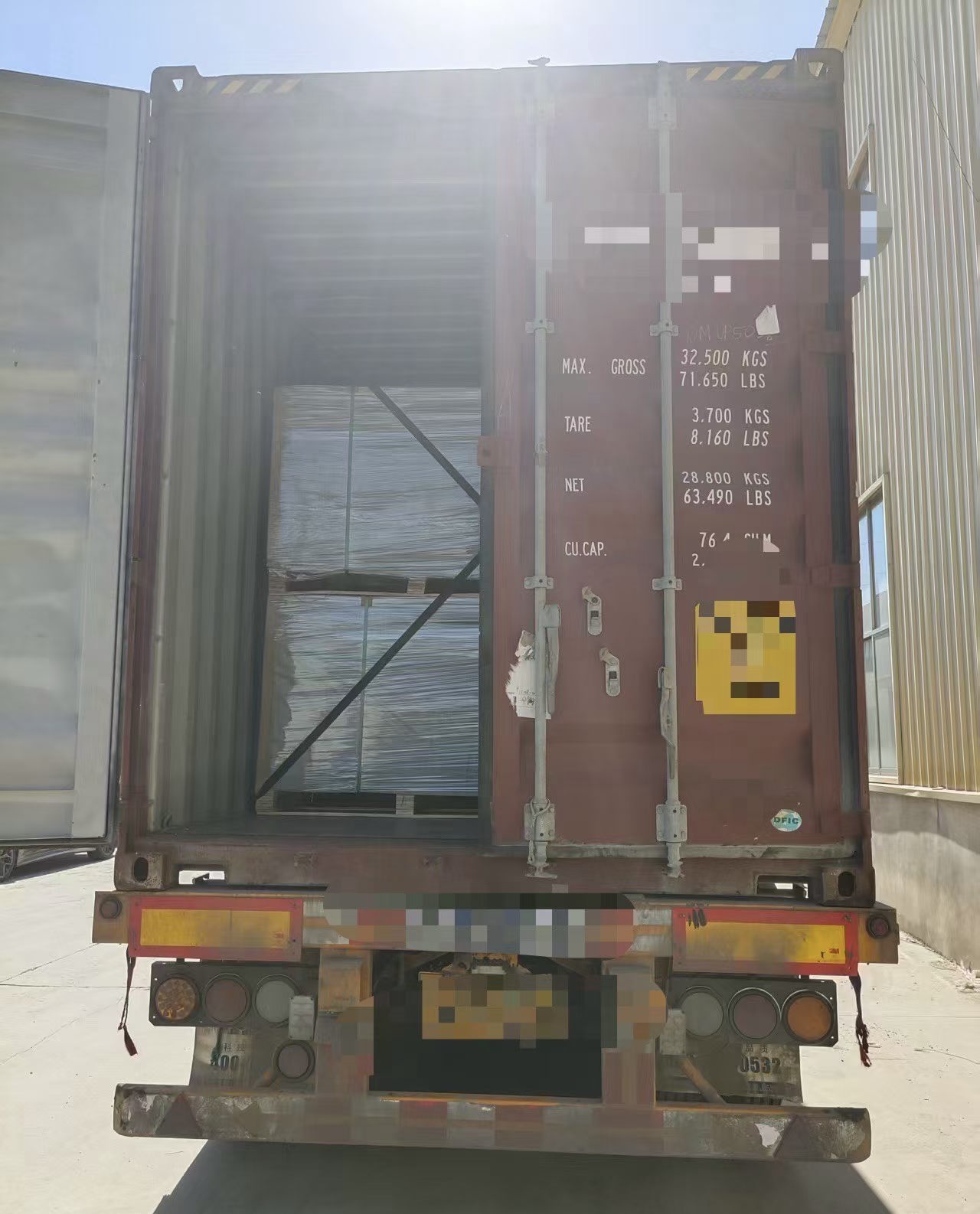
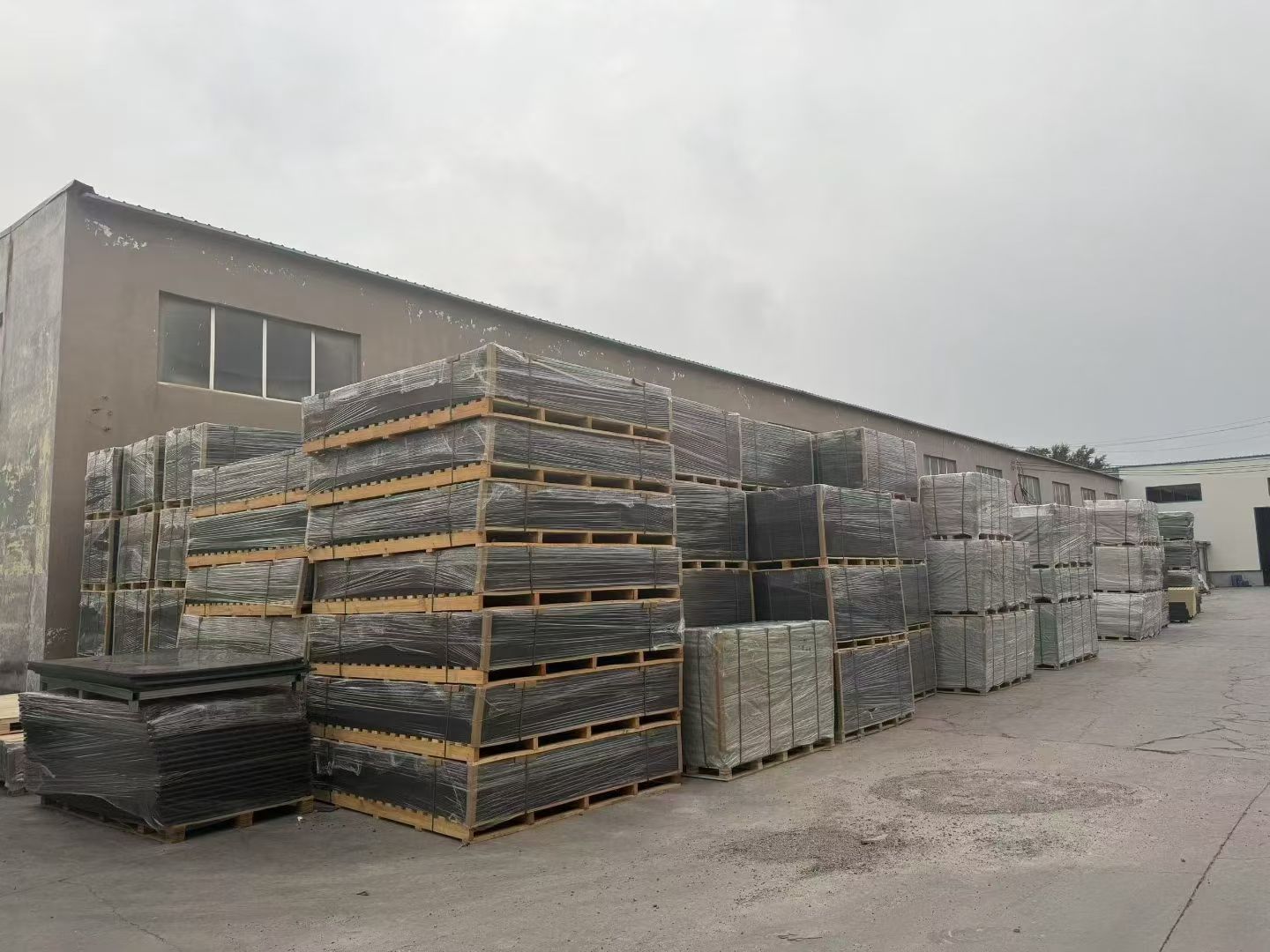
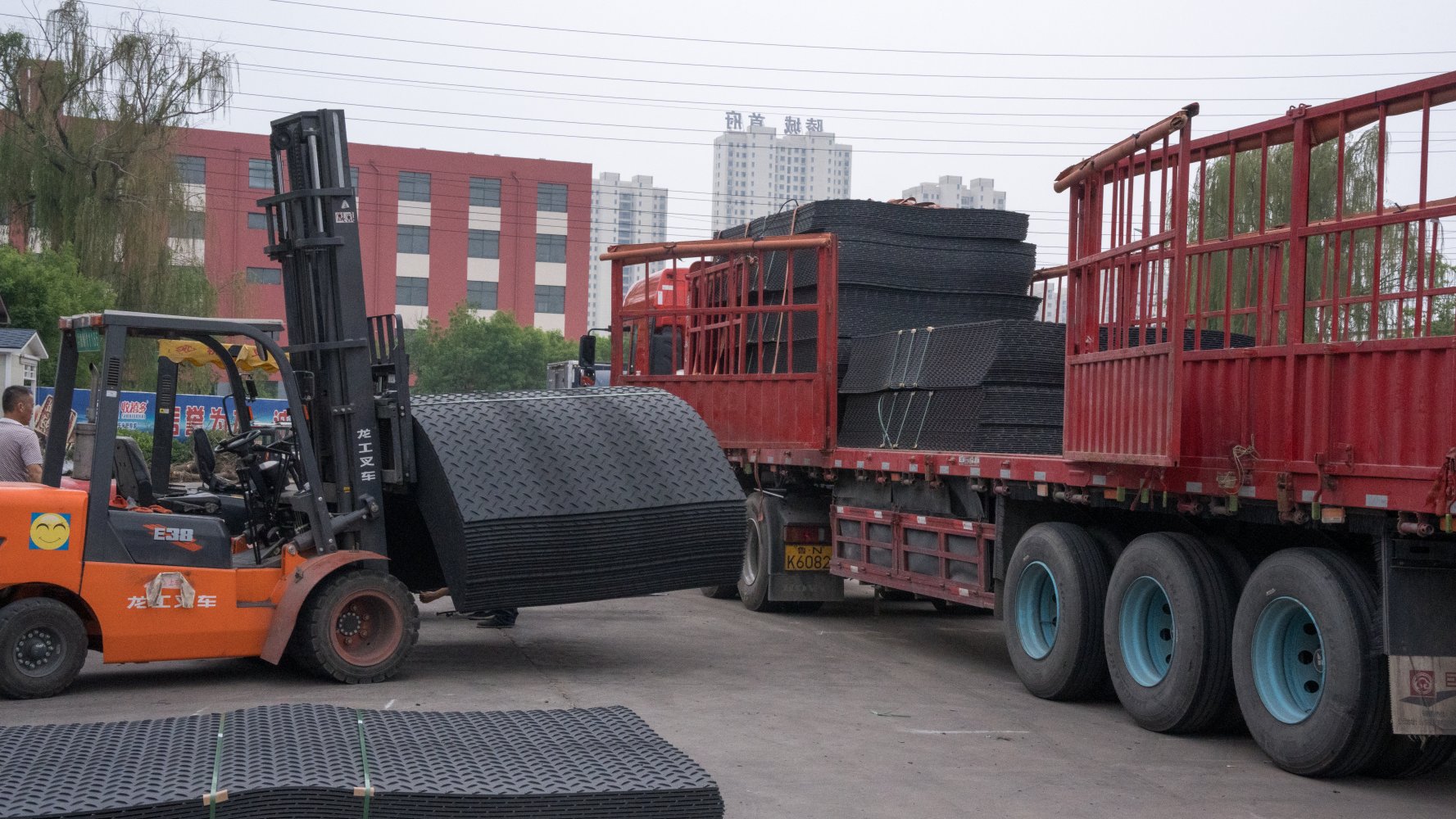
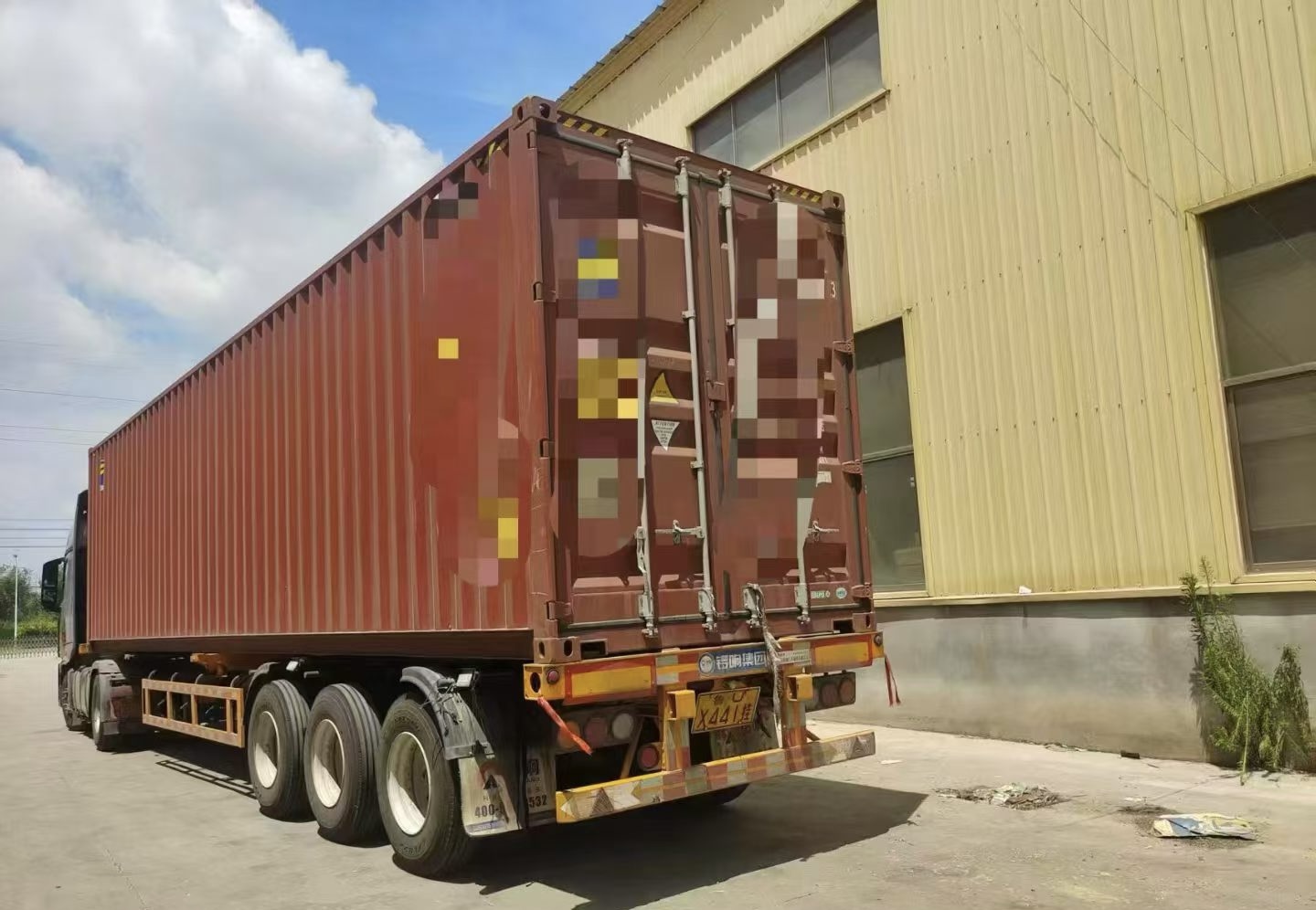
All photographs show our own mats and facilities in Shijiazhuang, Hebei, China. Container numbers and vehicle plates are obscured for privacy.
The container we load
Our standard export shipment is a 40-foot high cube (40HQ). The figures below are read directly from the door plate of the container shown in the photo above — they are the real limits we load to, not generic values.
| Plate field | Metric | Imperial | What it means for your order |
|---|---|---|---|
| Max gross | 32,500 kg | 71,650 lbs | Container plus cargo combined limit |
| Tare | 3,700 kg | 8,160 lbs | Weight of the empty container |
| Net payload | 28,800 kg | 63,490 lbs | Maximum weight of mats we can load |
| Cubic capacity | 76 m³ | 2,687 cu.ft | Internal volume available |
HDPE mats are dense cargo, so a container normally reaches its weight limit before it runs out of space. That is why the payload figure matters more than the cubic figure when you plan an order. Your quote will always state the planned container type, net weight and panel count.
Planning a shipment? Send us your target quantity and destination port. We will confirm whether a 20GP, 40GP or 40HQ gives you the best freight cost per mat, and provide the full packing list.
Indicative container loading by thickness
The table gives a planning estimate for 1220 × 2440 mm (4 × 8 ft) mats in a 40HQ, based on the 28,800 kg net payload and each gauge’s unit weight. Actual panel counts depend on the size mix, palletising method and axle limits in your country — confirm the final figure on your packing list.
| Thickness | Weight per panel* | Est. panels / 40HQ | Est. area covered | Typical shipment |
|---|---|---|---|---|
| 12.7 mm | 36.8 kg | approx. 650–750 | 1,940–2,240 m² | Light-duty surface protection |
| 20 mm | 58 kg | approx. 420–480 | 1,250–1,430 m² | General site access |
| 30 mm | 87 kg | approx. 280–320 | 835–955 m² | Heavy plant, haul roads |
| 40 mm | 116 kg | approx. 210–240 | 625–715 m² | Soft ground, repeated routes |
| 50 mm | 145 kg | approx. 175–200 | 520–595 m² | Very heavy equipment |
| 60 mm | 174 kg | approx. 145–165 | 430–490 m² | Crane pads, extreme point loads |
* Unit weights are for a 1220 × 2440 mm panel. Ranges allow for pallets, strapping and a realistic loading margin. Figures are indicative only and are not a shipping guarantee. Area covered assumes butt joints with no overlap. See full thickness and load data.
How we load your container
- Inspect and countFinished mats are checked, graded and counted against your order before anything moves.
- Palletise and wrapSheets are stacked on wooden pallets and stretch-wrapped so they arrive clean and square-edged.
- Strap and braceEach stack is strapped, with timber bracing where needed to stop movement in transit.
- Forklift into the containerWhole stacks are lifted in as one unit and placed to keep the load balanced across the floor.
- Weigh, seal and documentWe record net weight and pallet count, then issue a packing list with net/gross weight for your customs clearance.
Packing and protection
Every shipment is prepared for a long sea journey. Depending on thickness and order size, mats are loaded either loose-stacked and strapped or palletised and stretch-wrapped — we choose the method that best protects your specific gauge.
| Element | What we use | Why it matters |
|---|---|---|
| Surface protection | Stretch wrap on palletised stacks | Keeps mats clean, dry and free of scuffs |
| Base | Wooden pallets / timber skids | Allows forklift handling and keeps sheets off a wet floor |
| Securing | Steel or polyester straps | Prevents stacks shifting during ocean transit |
| Bracing | Timber blocks where required | Fills gaps and stabilises uneven stacks |
| Documentation | Packing list with net/gross weight and pallet count | Supports customs clearance and receiving checks |
Need a specific packing requirement — neutral packing, your own label, or a particular pallet size? Tell us at enquiry stage and we will build it into the quote.
Loading & shipping FAQ
How many mats fit in a 40HQ container?
It depends on thickness and panel size. For 1220 × 2440 mm sheets, a 40HQ carrying 28,800 kg holds roughly 650–750 panels at 12.7 mm, down to about 145–165 panels at 60 mm. We will give you an exact panel count on your packing list.
Which container type do you ship in?
Our standard export container is a 40HQ high cube with a 28,800 kg net payload and 76 m³ volume. For smaller orders we can use a 20GP or 40GP, and for large or consolidated orders we can plan multiple containers.
Do you provide a packing list and weight certificate?
Yes. Every shipment includes a packing list showing net and gross weight, panel count and pallet count. Third-party test data and a certificate of analysis are available on request.
Can I visit the factory to see loading myself?
Yes. We welcome customer visits to our Shijiazhuang factory, where you can inspect production, thickness checks and container loading in person. Contact us to arrange a time.
How are mats protected during sea freight?
Mats are stacked on pallets, stretch-wrapped and strapped, with timber bracing where needed. This keeps them clean, dry and stable from our loading bay to your port.
Can you load mixed sizes and thicknesses in one container?
Yes. We can consolidate several gauges and sizes into one container. Send us the breakdown and we will calculate the combined weight and panel count for you.
Ready to plan your shipment?
Tell us your quantity, destination port and preferred thickness. We will return a quote with panel count, packing details and a container loading plan.
- Real factory loading photos
- Net weight and pallet count on every quote
- Factory visits welcome